- Distance travelled
- Time and entries in each zone you draw
- Active time per animal
- Treatment-group reports with exportable charts
- Ready-made setups for elevated plus maze, forced swim, Morris water maze and Y maze: arena zones placed for you, the usual measures of each test in your report
- The track and the video of any test, to check before you export
- Every test sealed when it ends, with a record of who changed what
- A dataset export ready for your statistics software
Rodent video tracking
Your rodent tests tracked and measured,
from any browser in the lab.
Run mouse and rat tests and find the results waiting for you when each test ends: distance, time in each zone, entries, activity. No analysis afternoon, no files to carry between computers, no software to install.
Mice and rats, in your own apparatus
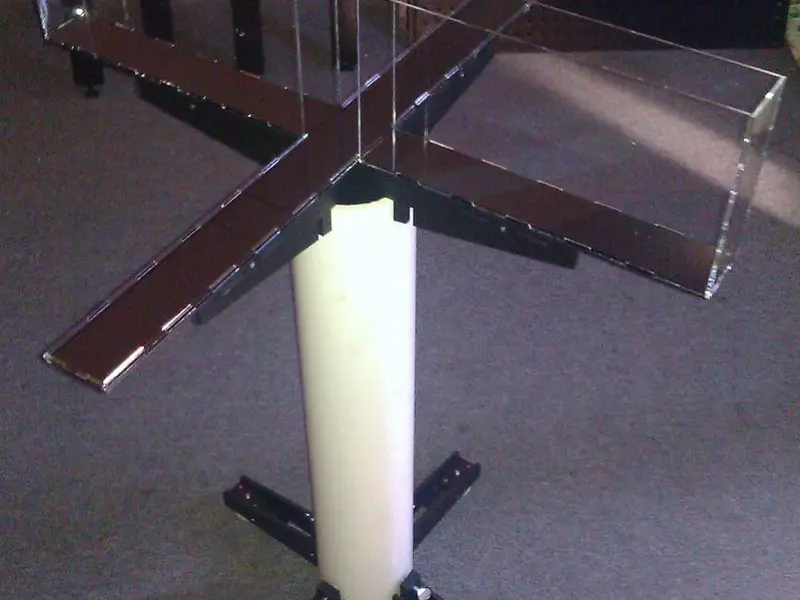
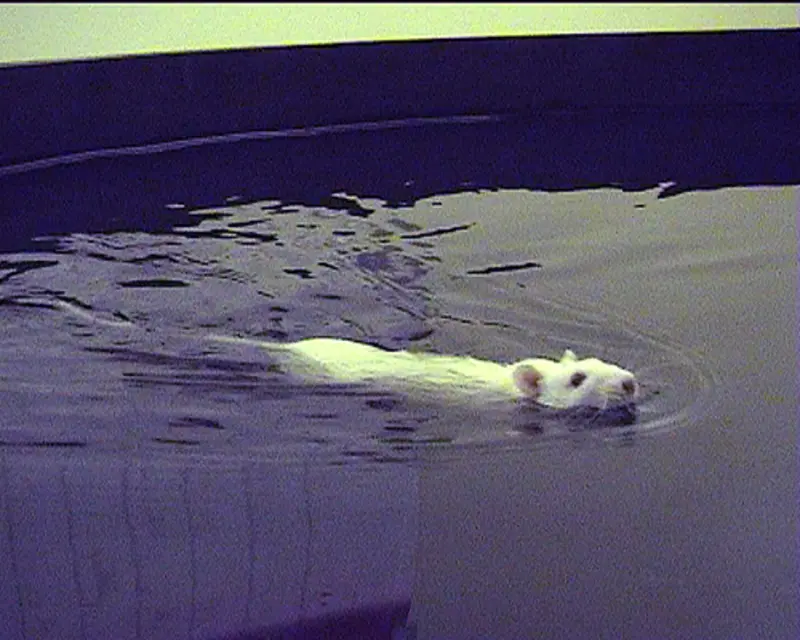
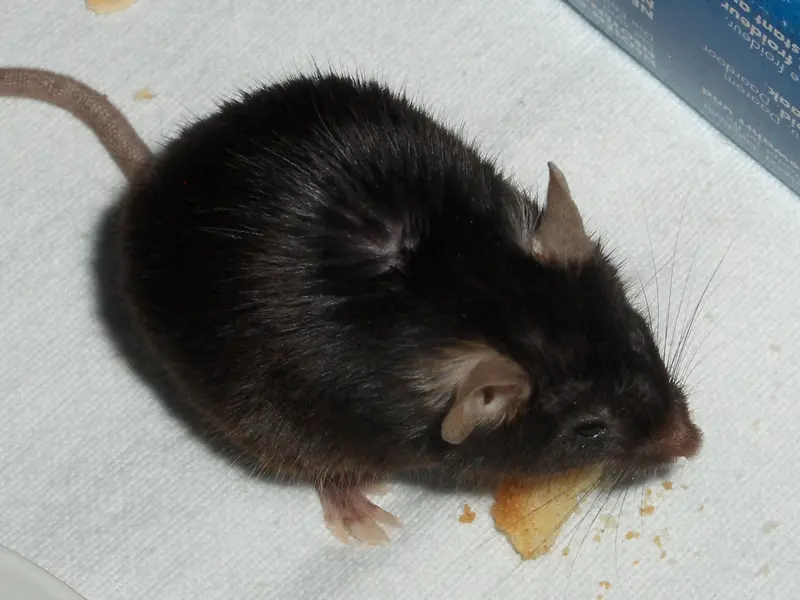
Forty seconds, one test
An elevated plus maze, from Start to the report.
The maze is found on the image, the mouse is followed through open and closed arms, and the report compares your groups when the test ends.
What you get after every test
Results the moment the test ends
Distance, time in each zone and zone entries are ready for every animal, so you can decide on the next run straight away.
Several animals per session
Record up to four arenas on one camera, one animal in each, and compare your treatment groups side by side.
One place for the whole team
Colleagues open the same experiments and results from their own computer. Nothing to install, nothing to copy.
The tests, and what each one gives you
Open field
Total distance, time and entries in the centre and the periphery, active time. The reference test for locomotion and anxiety-like behavior. Open field page →
Elevated plus maze
Time and entries in open and closed arms, distance, centre time. The cross is found on the image of your maze.
Light/dark box
Time in the lit and dark compartments, transitions, latency to the first crossing.
Novel object recognition
Time around each object, visits, discrimination between familiar and novel object.
Y maze
Arm entries, spontaneous alternation, distance. The Y is found on the image of your maze.
Morris water maze
Latency to the platform, path length, time in each quadrant. The pool is found on the image.
Forced swim test
Immobility, and an “almost immobile” indicator shown live on the station during the test.
Barnes maze
Latency and errors to the escape hole, distance, time per sector.
Three-chamber social test
Time in each chamber and around each cage, entries, sociability and social novelty.
A typical session
Animals and treatments
Fill the animal list and the treatment groups in a grid, or import them from your file.
Arenas placed on the image
Draw your zones once on the picture of your apparatus, or let the station find the usual mazes and pools; the layout is kept for every cohort.
Start, test, next animal
One Start per animal and arena; the queue of planned tests is shown on the station itself, even with the lab network down.
Report and export
Groups compared on a chart, an exportable dataset for your statistics, and the archive of every test, sealed.
Built for reproducible science
Same settings, every cohort
The protocol, the zones and the thresholds are saved with the experiment. Repeat a study in one click, months later, with the same setup.
Every result traceable
Each test is sealed when it ends. Who started it, on which station, with which protocol version: it is all recorded.
Checked against manual scoring
You can score a video by hand on the same screen and compare your scoring with the automatic measures, test by test.
Common questions
Which rodents and tests does it support?
Mice and rats, in open field, elevated plus maze, light/dark box, novel object recognition, Y maze, Morris water maze, Barnes maze, forced swim and three-chamber tests. Tell us your test and we will say what we measure.
Can it track a black mouse on a dark floor?
The station is delivered with an infrared camera, and we advise you on the floor and the lighting of your arena during the demo so that every animal is followed reliably.
Do we need to buy a computer or a camera?
No. The station and its infrared camera arrive ready to use, on rental with your subscription.
How many animals per session?
Up to four arenas on one camera, one animal in each. Each Start is one animal per arena, and the planned animals are queued for you.
Can several people use the same experiment?
Yes. Your whole team works in one shared workspace, each from their own computer, and two colleagues can never start a test over each other.
Can we check a result before we export it?
Yes. The track and the video of any test are kept, and a manual scoring tool lets you compare your own scoring with the automatic measures.
Can we try it before subscribing?
Yes. Request your free demo to run a simulated rodent experiment, then try the complete setup in your lab for 15 days.
Keep exploring
Request your free demo and run a simulated test in minutes.
See your own rodent experiment tracked.
Photo credits
- [1] Elevated plus maze with two open and two closed arms, builttospec, CC BY 2.0, via Flickr, resized.
- [2] White rat swimming in a Morris water maze, Jean-Etienne Minh-Duy Poirrier, CC BY-SA 2.0, via Wikimedia Commons, resized.
- [3] Black laboratory mouse seen from above on a white surface, Wualex, public domain, via Wikimedia Commons, resized.

