- Rodent video tracking: open field, mazes, swim tests, novel object, social test
- Open field: centre and periphery time, distance, entries, activity
- Zebrafish larvae: multi-well plates, one larva per well
- Reports by treatment group, charts exportable for your paper
- Every test sealed when it ends, with a record of who changed what
- Lab plan from €1,200 a year, equipment included
Animal behavior research
Behavior experiments measured as they run,
results shared with your whole lab.
A capture station and infrared camera arrive ready to use. Your rodent and zebrafish tests are tracked and measured on the station as they run, and your team finds organized results from any computer in the lab, the moment the last animal is back in its cage.
One station, every classic test
Animus in one minute
Delivery, setup, tracking and results.
The station arrives ready, the test runs on it, and the whole lab reads the results from a browser.
Built for the research you do
Behavioral neuroscience
Exploration, anxiety-like behavior, learning and memory: your arenas, your zones, the measures of each test ready after every run.
Psychopharmacology and drug discovery
Treatment groups compared on a chart as the study progresses, with the same protocol applied to every cohort.
Toxicology and safety studies
Locomotor activity and immobility recorded the same way on every animal, with every test sealed and traceable.
Phenotyping of genetic models
Screen lines on the open field, the maze or the plate, and pool tests from several stations into one study.
Animal welfare and refinement
Shorter sessions, fewer repeats and reliable numbers from the first cohort: good science and the 3Rs go together.
Teaching labs
Students run a real test, see the track and the results immediately, and learn to read a behavioral dataset.
Tests you can run
Exploration and anxiety-like behavior
- Open field
- Elevated plus maze
- Light/dark box
Learning and memory
- Novel object recognition
- Y maze, spontaneous alternation
- Morris water maze
- Barnes maze
Mood, social and zebrafish
- Forced swim test
- Three-chamber social test
- Zebrafish larvae in multi-well plates →
From the first animal to the figure
Describe the experiment
Animals, treatments and the test to run, in a spreadsheet-like grid your team already understands.
Place the animal, press Start
The station records and measures the test. Each Start is one animal per arena; the next animal is queued for you.
Results when the test ends
Distance, time and entries per zone, activity, for every animal, with the track and the video to check.
Compare and export
Groups compared on a chart for your lab meeting, a dataset ready for your statistics software, the archive kept.
What you stop doing
No analysis afternoons
No video to replay, no stopwatch, no spreadsheet built by hand after the session.
No files to carry
Nothing on USB drives, nothing to install on each PC. Everyone opens the same experiment from a browser.
No licence per seat
One plan for the whole lab, the station and the camera on rental, kept up to date for you.
Common questions
Which animals can Animus track?
Mice and rats in their classic arenas, and zebrafish larvae in multi-well plates. Tell us what you observe and we will say what we measure.
Which research areas use it?
Behavioral neuroscience, psychopharmacology and drug discovery, toxicology and safety studies, phenotyping of genetic models, animal welfare and refinement work, and teaching labs.
Do we need our own computer or camera?
No. The capture station and its infrared camera arrive ready to use, on rental with your plan. Your team works from the computers it already has.
Where do our test data go?
The raw data of each test stays on your station; your team sees the organized results in one shared workspace, and can download the complete archive of any test.
Can we keep our own protocols and arenas?
Yes. You draw your zones on the image of your own apparatus, save the protocol once and reuse it for every cohort. Ready-made layouts exist for the usual tests.
Is it suitable for regulated studies?
Every test is sealed when it ends, with a record of who changed what. An electronic signature option and a validation dossier for each station are available for laboratories that need them.
How can we try it?
Request your free demo to run a simulated experiment in your browser, then test the complete setup in your lab for 15 days.
Keep exploring
Request your free demo: a simulated experiment in minutes.
See what Animus measures for your animals.
Photo credits
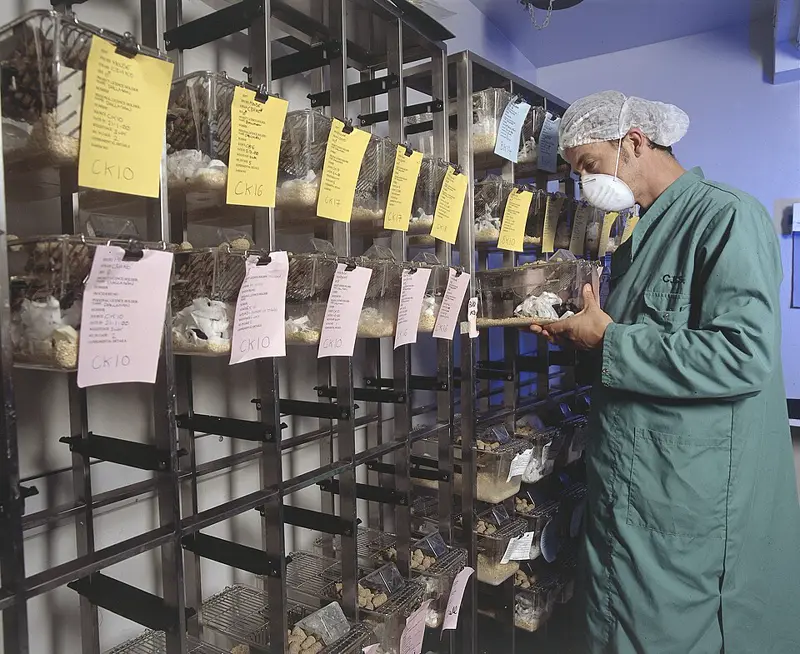
- [1] Lab technician checking mouse cages in an animal facility, Understanding Animal Research, CC BY-SA 4.0, via Wikimedia Commons, resized.
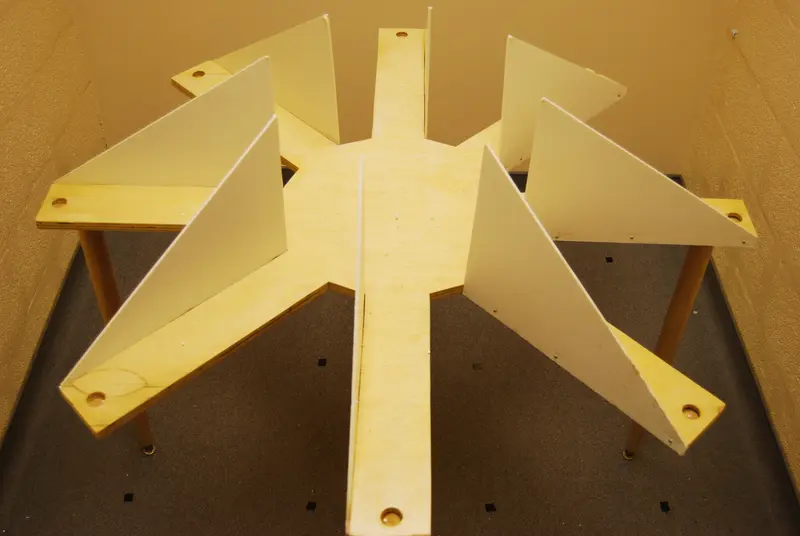
- [2] Eight-arm radial maze seen from above in a testing room, Mcole13, CC BY-SA 3.0, via Wikimedia Commons, resized.
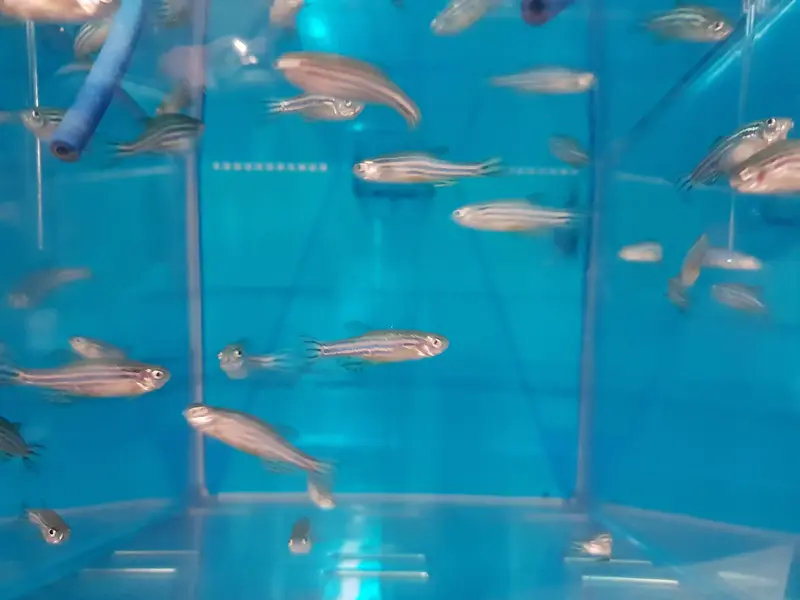
- [3] Zebrafish swimming in a laboratory aquarium, CSAR ACE, CC BY-SA 4.0, via Wikimedia Commons, resized.


